
Galle Fort One Day Tour Guide: Everything to See and Do
In This Guide
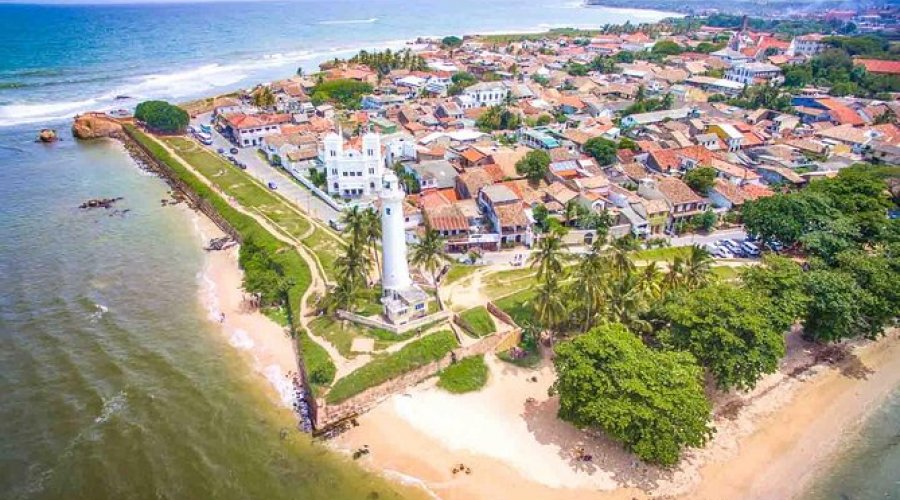
Galle Fort occupies a rocky headland at the southwestern tip of Sri Lanka. Originally built by the Portuguese in 1588 and substantially expanded by the Dutch in the 17th century, the fort's stone walls and grid of colonial streets survived the 2004 tsunami almost entirely intact — a remarkable piece of architectural fortune.
Today the fort is a UNESCO World Heritage Site and a living neighbourhood: people live and work here alongside guesthouses, cafés, museums, and boutiques. A full day inside the walls gives you time to explore it properly without rushing.
Getting to Galle Fort
Galle Fort is 126 km south of Colombo Airport via the Southern Expressway. From within Galle town, it's accessible by tuk-tuk or on foot from the main bus station. If you are staying in Unawatuna (3 km away) or Mirissa (35 km east), the easiest option is a private taxi or tuk-tuk.
Vehicles can enter the fort through the main gate, but parking is very limited. Ask your driver to drop you at the Main Gate and arrange a pickup time — the fort itself is best explored on foot.
Morning: The Ramparts and Main Gate
Start your day early (7–8am) before the heat builds up. Begin at the Main Gate on the northeastern side — the original Dutch gate is marked with the VOC (Dutch East India Company) monogram above the arch. Walk along the outer ramparts that face the Indian Ocean. The rampart walk takes about 30–45 minutes at a slow pace and offers wide views of the sea on one side and the fort's rooftops on the other.
- Main Gate (northeastern entrance) — Dutch VOC monogram above arch
- Flag Rock (southwestern tip) — the lighthouse and cannon battery
- Point Utrecht Bastion — popular sunrise and sunset spot
- Triton Bastion and Star Bastion along the southern wall
Mid-Morning: The Dutch Quarter
Inside the walls, the streets follow a Dutch grid laid out in the 1600s. The main inland streets — Leyn Baan Street, Pedlar Street, and Church Street — are lined with two-storey colonial buildings, many now converted into boutique hotels and galleries.
- Dutch Reformed Church (1755) — one of the oldest Protestant churches in Asia; the interior tombstone floor is extraordinary
- All Saints Church — British-era Anglican church with stained glass
- Old Dutch Hospital — now a restaurant and shopping precinct
- National Museum of Galle — Dutch-period artefacts and tsunami records
Lunch: Where to Eat Inside the Fort
The fort has a range of cafés and restaurants. For a casual lunch, the street facing the ramparts on Church Street and Leyn Baan Street has several options. Arrive before 12:30 to avoid the lunchtime crowd.
- Fortaleza Restaurant — Sri Lankan and international food in a colonial courtyard
- Pedlar's Inn Café — good coffee and light meals on Pedlar Street
- The Old Courthouse — rooftop views over the fort walls
- Several smaller cafés along Leyn Baan Street for local rice and curry
Afternoon: Museums and the Lighthouse
After lunch, visit the Galle National Museum to understand the fort's layered history — Portuguese, Dutch, and British eras all left distinct marks on the architecture and culture. Then walk to Flag Rock, where the lighthouse stands at the far end of the ramparts. The lighthouse itself is not open to visitors, but the surrounding area has some of the fort's best sea views.
- Galle National Museum — entry fee applies; photography permitted in some areas
- Historical Mansion Museum — private collection of Dutch-era objects
- Lighthouse at Flag Rock — free to visit the surrounding area
- Local gem shops along Leyn Baan Street (blue sapphires and moonstones are common)
Late Afternoon: Sunset on the Ramparts
The Point Utrecht Bastion and Flag Rock areas become popular around sunset. The light turns golden over the Indian Ocean, and the ramparts are a genuinely beautiful place to end the day. Cricket is often played informally on the grassy area inside the walls in the late afternoon.
The fort becomes significantly less crowded after 4pm as day-trippers leave. If you want the streets mostly to yourself, this is the time to wander.
Practical Information
- Entry to Galle Fort is free — it is a living neighbourhood, not a ticketed attraction
- Museum entry fees: approximately LKR 500–1,000 per person
- Best months to visit: December to April (dry season); July–August is also good
- Dress modestly if visiting churches — shoulders and knees covered
- The fort is compact: roughly 400m × 400m, walkable without transport
Related Services & Tours
Frequently Asked Questions
Common questions about this topic
No — the fort itself is open to the public at all times and there is no entrance fee. Individual museums and some heritage sites inside charge a separate fee.
A minimum of 3–4 hours is needed for a surface-level visit. A full day gives you time to walk the ramparts, visit one or two museums, have lunch, and explore the back streets at a relaxed pace.
Vehicles can enter through the main gate, but the streets are narrow and parking is very limited. Most visitors are dropped at the gate and explore on foot, then arrange for pickup.
Yes — the rampart walk is engaging for children (wide, safe pathways), and the open green area inside the fort is good for running around. The museums may be less interesting for younger children.
Early morning (7–9am) is best for cooler temperatures and fewer crowds. Late afternoon (from 4pm) is excellent for sunset views on the ramparts with lighter tourist traffic.
Book via WhatsApp
Want a private taxi for your Galle Fort visit? We can arrange pickup from anywhere in the south and ensure you get there with time to explore.
Chat on WhatsApp